
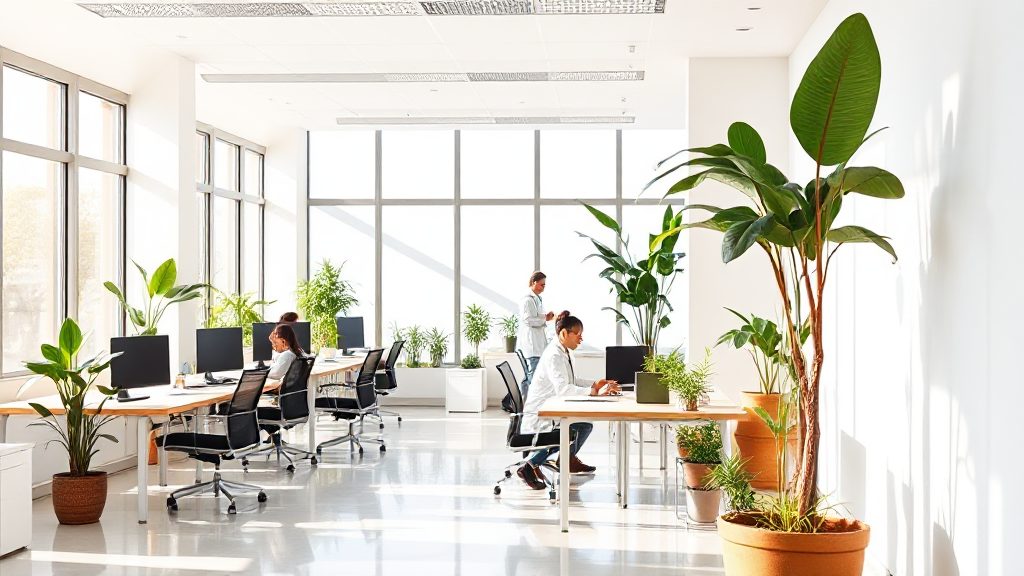
Bringing Nature to Work Without Renovating the Building
One mid-sized insurance office did something almost embarrassingly simple. It moved two rows of desks closer to the windows, added a few large planters, and started tracking sick leave. Over the following year, unplanned absence dropped noticeably, and the biggest surprise was that nobody had touched the HVAC system, the floor plan, or the budget for a designer. The change came from light, greenery, and a slightly better relationship with the outdoors.
That story is not unusual. Across offices, co-working spaces, and light industrial sites, the same pattern keeps appearing: when people can see plants, daylight, or a patch of sky, they take fewer sick days and report lower exhaustion. The mechanism is not mystical. It is a mix of stress recovery, air quality, movement, and the small psychological boost that comes from not feeling sealed inside a box for nine hours. This article is a practical checklist for managers and employees who want those benefits without a renovation project. If you are already interested in Gardening at home, you will recognize most of the principles — they simply scale down to a desk, a windowsill, or a factory break room.
Why Workplace Nature Is a Health Intervention, Not a Decoration
Most workplace wellbeing budgets go to ergonomic chairs and mental health apps. Both have value, but neither changes what an employee sees and breathes for eight hours a day. Plants and views do. Research on attention restoration suggests that natural scenes give the brain’s directed-attention system a chance to recover, which is why a ten-minute look at trees can feel more restorative than ten minutes of scrolling. That recovery shows up in fewer errors, calmer meetings, and less end-of-day irritability.
The health case is just as concrete. Indoor plants and green views are associated with lower reported stress, better perceived air quality, and higher satisfaction with the workspace. In factories and warehouses, where noise and artificial light dominate, even a small green zone near the break area can give workers a genuine psychological reset. None of this replaces proper ventilation, safety equipment, or fair scheduling. It sits on top of them as a low-cost layer of Health support that people actually notice.
There is also a social effect that managers rarely anticipate. Plants create informal gathering points. People water them, comment on them, and rearrange them. In co-working spaces, where members have no shared history, a communal planter becomes a tiny social object. That reduces isolation, and isolation is one of the quieter drivers of burnout.
The Zero-Budget Tier: What You Can Do This Week
Start with what already exists. Before buying anything, walk the space and answer four questions: Where does daylight actually land during working hours? Which desks never see the sky? Where do people already take breaks? What is the air like — stuffy, dry, or drafty? Write the answers down. Most workplace nature plans fail because they ignore the building’s existing geometry.
Then make three free changes. First, move at least one meeting per week outdoors or to the brightest indoor spot available. Second, shift a few desks or hot-desk zones toward windows, even if that means rethinking who gets the corner. Third, establish a real outdoor break norm — not a cigarette-only culture, but a fifteen-minute walk or standing break that managers visibly take themselves. Culture follows visible behavior, not policy documents.
Add one more zero-cost habit: open the blinds. It sounds trivial, but many offices keep blinds closed year-round because of glare on one screen. A simple repositioning of monitors, or a sheer layer, often solves it. Daylight is the cheapest nature intervention available, and it is usually wasted.
The Low-Cost Tier: Plants, Planters and Light
Once the free moves are in place, a small budget goes a long way. Aim for three categories of greenery rather than one uniform look. Floor plants such as rubber plants, monstera, or ficus fill vertical space and soften hard corners. Desk plants such as pothos, snake plants, or small ferns give individuals ownership. Shared planters near entrances, kitchens, and break rooms create communal care.
Choose species for the light you actually have, not the light you wish you had. Low-light corridors need snake plants, ZZ plants, or pothos. Bright south-facing windows can handle succulents, herbs, and flowering plants. If a space has no natural light at all, do not force it — use high-quality full-spectrum lamps on a timer, and treat the plants as a lighting feature rather than a botany experiment.
Maintenance is the make-or-break factor. A dying plant is worse than no plant, because it signals neglect. Assign care explicitly, or hire a small plant-service contract. In factories and warehouses, place greenery where it will not create trip hazards, block emergency routes, or interfere with machinery. Safety rules come first; aesthetics come second.
Pair the plants with better light where you can. Warmer, dimmable lighting in break areas and cooler, brighter light in work zones supports alertness and rest at the right times. If you want a deeper grounding in how plants and natural light interact with human wellbeing, the broader topic of Nature and its effects on attention and mood is a useful place to start.
The Structural Tier: Views, Access and Outdoor Space
Some changes need a facilities conversation, but they are still cheaper than a full renovation. The highest-value structural move is protecting sightlines to windows. Remove tall storage units that block daylight, lower partition walls where privacy allows, and avoid placing printers or filing cabinets in front of glazing. If a view exists, let people see it.
Next, create at least one genuine outdoor access point. A courtyard, a balcony, a loading dock converted into a seating area, or even a paved strip with benches and planters can serve as a micro-restoration zone. The key is permission and comfort: shade, seating, and a clear signal that stepping outside for ten minutes is acceptable. In industrial settings, this often means coordinating with safety officers so that outdoor breaks do not conflict with PPE or zone rules.
Finally, consider a small on-site garden. It does not need to be productive in the agricultural sense. A raised bed of herbs, pollinator-friendly flowers, or a few tomato plants gives employees a reason to step outside, use their hands, and notice the seasons. Workplace gardens are among the most durable wellbeing initiatives because they are self-renewing: someone always wants to water, prune, or harvest. For teams that want guidance, the practical side of Gardening translates directly into raised beds, container planting, and seasonal care.
Implementation Checklist by Role
Managers and facilities leads can use this checklist to sequence the work.
Week 1 — Audit: Map daylight, identify windowless zones, list existing outdoor access, and note current break habits. Ask employees where they feel most drained.
Week 2 — Free moves: Open blinds, relocate a few desks, move one recurring meeting outdoors or to the brightest room, and model outdoor breaks at senior level.
Month 1 — Green layer: Buy plants matched to light conditions, assign care owners, and place shared planters in social areas. Add full-spectrum lamps where daylight is impossible.
Month 2–3 — Structural tweaks: Clear window sightlines, negotiate one outdoor seating area, and pilot a small raised-bed or container garden.
Ongoing — Governance: Add plant care and outdoor access to onboarding, include greenery in facilities reviews, and rotate responsibility so it does not fall on one enthusiastic person forever.
Employees can run a parallel checklist: claim a desk with daylight when possible, adopt one desk plant, take a real outdoor break instead of eating at the screen, and raise blocked windows or broken blinds with facilities rather than enduring them.
How to Measure Whether It Is Working
Do not rely on vibes. Pick a small set of measures and track them for at least two quarters before drawing conclusions. Useful indicators include unplanned sick days per employee, self-reported end-of-day fatigue on a simple one-to-five scale, voluntary use of outdoor break areas, and participation in plant care or garden activities. If your organization already runs engagement surveys, add two questions: whether people feel they have access to daylight, and whether they can take a restorative break during the day.
Be honest about confounders. Seasonal illness, workload spikes, and policy changes can all move sick-leave numbers. That is why direction of travel over several months matters more than any single month. Also watch for unintended effects: plants that trigger allergies, outdoor areas that become de facto smoking zones, or garden duties that quietly become unpaid extra work for one team. Adjust as you learn.
The most common finding is modest but real: fewer sick days, better mood, and a workplace that feels less like a holding pen. That is a reasonable return for planters, blinds, and a bench.
Frequently Asked Questions
Do we need a big budget to see results?
No. The free tier — daylight, desk placement, outdoor breaks, and visible manager behavior — often produces the most noticeable change. Plants and planters add to it, but they are not the starting point.
What if our building has no windows or natural light?
Use full-spectrum lighting on timers, prioritize high-quality break areas with greenery, and protect any outdoor access you do have. Even a short outdoor walk can compensate for a windowless work zone.
Who should take care of the plants?
Shared ownership works best, with one coordinator. Assign departments or teams to specific planters, put care instructions on labels, and consider a small maintenance contract for large floor plants.
Can this work in a factory or warehouse?
Yes, with safety first. Place greenery in break rooms, offices, and designated rest zones rather than on the production floor, and coordinate outdoor break areas with your safety and operations teams.
How long before we see measurable effects?
Give it two quarters. Mood and break habits often shift within weeks, while sick-leave patterns need a longer window to separate signal from seasonal noise.